
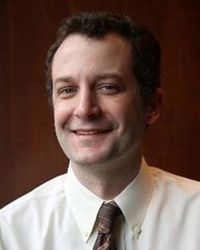
William Dalton, MD, PhD
Hematologic Malignancy
Highlights
Johns Hopkins Affiliations:
- Johns Hopkins School of Medicine Faculty
About William Dalton
Primary Academic Title
Assistant Professor of Oncology
Johns Hopkins Physician

Background
Dr. Dalton is an Assistant Professor of Oncology at The Johns Hopkins University School of Medicine. He is active in the Division of Hematology Malignancies, Leukemia Program at the Sidney Kimmel Comprehensive Cancer Center at Johns Hopkins.
Dr. Dalton has expertise in myelodysplastic syndromes (MDS), acute myeloid leukemia (AML), myeloproliferative neoplasms (MPN), and acute lymphoblastic leukemia (ALL).
Dr. Dalton received a combined M.D./Ph.D. degree through the Medical Scientist Training Program at Emory University School of Medicine. He completed a residency in internal medicine and a fellowship in medical oncology at Johns Hopkins. He joined the Johns Hopkins faculty in 2017.
Dr. Dalton is a member of the American Society of Hematology and the American Society of Clinical Oncology.
Dr. Dalton's primary research is to better understand the genetic events that drive MDS and AML and to develop new therapeutic approaches against these diseases.
Centers and Institutes
Clinical Trial Keywords
Myelodysplastic Syndromes; Acute Myeloid Leukemia; Myeloproliferative Neoplasms; Acute Lymphoblastic Leukemia
Contact for Research Inquiries
1650 Orleans Street
Suite 288
Baltimore, MD 21287
Research Interests
Acute Myeloid Leukemia (AML), Cancer Metabolism, Myelodysplastic Syndromes (MDS), Novel Therapeutic Vulnerabilities, RNA Splicing
Research Summary
As a physician-scientist in the Division of Hematologic Malignancies at the Johns Hopkins Sidney Kimmel Comprehensive Cancer Center, Dr. Dalton has a clinical specialty in myeloid leukemias and a research laboratory that focuses on the study of DNA mutations that drive those leukemias. In particular, he is working to better understand DNA mutations in the spliceosome, which occur in many patients with MDS and AML and are currently difficult to treat. He uses bone marrow and blood samples generously donated by patients, together with cell ‘models’ that he genetically engineers in the lab, to understand what these DNA mutations do and how they might be targeted with new treatments. His work has led to identification of vulnerabilities in cells containing these mutations that he aims to translate into novel therapeutic approaches in MDS and AML.
PubMed - Publications
Selected Publications
Dalton WB, Forde PM, Kang H, Connolly RM, Stearns V, Gocke CD, Eshleman JR, Axilbund J, Petry D, Geoghegan C, Wolff AC, Loeb DM, Pratilas CA, Meyer CF, Christenson ES, Slater SA, Ensminger J, Parsons HA, Park BH, Lauring J. Personalized Medicine in the Oncology Clinic: Implementation and Outcomes of the Johns Hopkins Molecular Tumor Board. JCO Precis Oncol. 2017;2017. doi: 10.1200/PO.16.00046. Epub 2017 May 31.
Dalton WB, Helmenstine E, Pieterse L, Li B, Gocke CD, Donaldson J, Xiao Z, Gondek LP, Ghiaur G, Gojo I, Smith BD, Levis MJ, DeZern AE. The K666N mutation in SF3B1 is associated with increased progression of MDS and distinct RNA splicing. Blood Adv. 2020 Apr 14;4(7):1192-1196. PMID: 32211880 PMCID: PMC7160262 DOI: 10.1182/bloodadvances.2019001127
Dalton WB, Helmenstine E, Walsh N, Gondek LP, Kelkar DS, Read A, Natrajan R, Christenson ES, Roman B, Das S, Zhao L, Leone RD, Shinn D, Groginski T, Madugundu AK, Patil A, Zabransky DJ, Medford A, Lee J, Cole AJ, Rosen M, Thakar M, Ambinder A, Donaldson J, DeZern AE, Cravero K, Chu D, Madero-Marroquin R, Pandey A, Hurley PJ, Lauring J, Park BH. Hotspot SF3B1 mutations induce metabolic reprogramming and vulnerability to serine deprivation. J Clin Invest. 2019 Aug 8;130:4708-4723. doi: 10.1172/JCI125022.
Dalton WB, Nandan MO, Moore RT, Yang VW. Human cancer cells commonly acquire DNA damage during mitotic arrest. Cancer Res. 2007 Dec 15;67(24):11487-92.
Dalton WB, Yu B, Yang VW. p53 suppresses structural chromosome instability after mitotic arrest in human cells. Oncogene. 2010 Apr 1;29(13):1929-40. doi: 10.1038/onc.2009.477. Epub 2010 Jan 11.
Honors
- Department of Defense Fellowship Breakthrough Award, 1/1/16
- Ladies Auxiliary of the Veterans of Foreign Wars Postdoctoral Cancer Research Fellowship Award, 1/1/16
- American Society of Clinical Oncology Young Investigator Award, 1/1/15
- American Federation for Medical Research Student Award, 1/1/04
Memberships
- American Society of Hematology
- American Society of Clinical Oncology
Professional Activities
- American Society of Hematology, Coordinating Abstract Reviewer, 1/1/20
- The Journal of Clinical Investigation, Peer Reviewer, 1/1/18
Locations
- The Johns Hopkins Hospital
- 1800 Orleans Street, Baltimore, MD 21287
- Get Directions
- Phone: 410-955-5000
- Fax: 410-955-5001
Expertise
Education
- Fellowship: Johns Hopkins University School of Medicine, Medical Oncology, 2016
- Residency: Johns Hopkins University School of Medicine, Internal Medicine, 2013
- Medical Education: Emory University School of Medicine, MD, 2010
- Graduate School: Emory University, PhD, 2008
Board Certifications
- Medical Oncology: American Board of Internal Medicine, 2016
Insurance
- Aetna
- CareFirst
- Cigna
- First Health
- Geisinger Health Plan
- HealthSmart/Accel
- Johns Hopkins Health Plans
- MultiPlan
- Pennsylvania's Preferred Health Networks (PPHN)
- Point Comfort Underwriters
- Private Healthcare Systems (PHCS)
- Veteran Affairs Community Care Network (Optum-VACCN)