
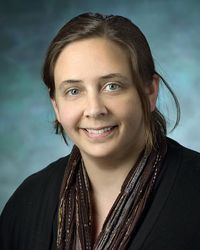
Tamara O'Connor, PhD
Highlights
Languages
- English
Gender
FemaleJohns Hopkins Affiliations:
- Johns Hopkins School of Medicine Faculty
About
Professional Titles
- Director of Admissions, Graduate Program in Biological Chemistry
Primary Academic Title
Associate Professor of Molecular Biology and Genetics
Background
Dr. Tamara O’Connor is an Associate Professor in the Department of Biological Chemistry at the Johns Hopkins University School of Medicine. She received Ph.D. in Biochemistry from McMaster University, Canada. Dr. O’Connor completed her postdoctoral work in Microbial Pathogenesis at Tufts University School of Medicine.
The O'Connor lab studies the molecular basis of infectious disease with a particular emphasis on the network of molecular interactions acting at the host-pathogen interface. Using Legionella pathogenesis as a model system, we are defining the various mechanisms by which an intracellular bacterial pathogen can establish infection, how they exploit host cell machinery to accomplish this, and how individual proteins and their component pathways coordinately contribute to disease. In parallel, we investigate how virulence strategies arise in environmental reservoirs as a consequence of bacterial interactions with protozoa and the role of these natural hosts in driving bacterial transmission and disease in humans. Using genetics and functional genomics, we examine the repertoires of virulence proteins required for growth in a broad assortment of hosts, how the network of molecular interactions differs between hosts, and the mechanisms by which bacterial pathogens cope with this variation.
Centers and Institutes
Recent News Articles and Media Coverage
- Study inspired by curious 15-year-old could advance search for novel antibiotics, Johns Hopkins University
Contact for Research Inquiries
725 N. Wolfe St.
Physiology Bldg, Room 510
Baltimore, MD 21205
Research Interests
Molecular dissection of host-pathogen interactions and the evolution of virulence strategies in natural reservoirs
Lab Website
-
The O'Connor lab studies the molecular basis of infectious disease using Legionella pneumophila pathogenesis as a model system.
Research Summary
Dr. O’Connor is researching the molecular dissection of host-pathogen interactions and the evolution of virulence strategies in natural reservoirs.
The outcome of most parasitic relationships is decided by an elaborate series of events involving hundreds of proteins. Understanding this interaction requires the analysis of the molecular mechanisms operating in both organisms and the causal relationships acting at the interface between them. The O’Connor lab studies the molecular basis of infectious disease using Legionella pneumophila pathogenesis as a model system.
L. pneumophila is a bacterial pathogen. In its natural environment of fresh water and soil, L. pneumophila is a parasite of a diverse array of amoebae and ciliated protozoa. When contaminated water aerosols are inhaled by humans, L. pneumophila replicates in alveolar macrophages causing an often fatal form of pneumonia called Legionnaires’ disease. We examine how L. pneumophila is able to manipulate host cell processes to establish growth within its host and the impact of its interaction with protozoa on the evolution of these virulence mechanisms.
Many bacterial pathogens use sophisticated secretion systems to translocate bacterial proteins into the cytoplasm of their host cell. These proteins modulate a vast array of host cellular processes to promote bacterial survival and replication. Defining the molecular mechanisms by which these proteins contribute to virulence is essential in understanding how bacterial pathogens cause disease. L. pneumophila harbors one of the largest repertoires of translocated substrates identified to date, deploying an arsenal of 270 proteins to modulate host cell possesses. Maintaining this large repertoire has resulted in a high degree of redundancy whereby different proteins can manipulate complementary host cell pathways providing the bacterium with multiple strategies to accomplish a single task. We use L. pneumophila pathogenesis to examine the numerous mechanisms by which an intracellular bacterial pathogen can establish infection, how it exploits host cell machinery to accomplish this and how individual proteins and their component pathways coordinately contribute to disease.
Although the role of protozoa in the lifecycle of many bacterial pathogens is only beginning to be appreciated, it is emerging as an important aspect in the epidemiology of many water and soil-borne pathogens. Not only do protozoa function as natural reservoirs for many pathogenic microorganisms, their interaction both provides a rich environment for the evolution of novel virulence strategies and enhances invasiveness in mammalian hosts. The genetic and molecular characterization of this interaction is instrumental in understanding how bacterial pathogens persist in nature and the selective pressures that shape the evolution of virulence strategies that promote disease in humans.
The ability of L. pneumophila to grow in a diverse array of protozoan hosts allows us to examine the molecular determinants of host-range and the evolution of microbial pathogenesis in nature. In fresh water and soil, L. pneumophila is destined to encounter a large number of amoebal species. This necessitates a virulence strategy that can compensate for host variation and thus, the accumulation of host-specific virulence factors. Using genetics and functional genomics, we compare and contrast the repertoires of virulence proteins required for growth in a broad assortment of hosts, how the network of molecular interactions differs between hosts and the mechanisms by which L. pneumophila copes with this variation. By examining how virulence strategies acquired for growth in amoebae can be used in mammalian hosts, we are defining how this interaction promotes the transition of bacterial pathogens from their environmental reservoirs to humans, bridging the gap between the ecology of microbial pathogens and disease.
PubMed - Publications
Selected Publications
-
Boamah DK, Zhou G, Ensminger AW, O’Connor TJ (2017) From many hosts, one accidental pathogen: the diverse protozoan hosts of Legionella. Front Cell Infect Microbiol. 7:477
-
Ghosh S and O’Connor TJ (2017) Beyond paralogs: the multiple layers of redundancy in bacterial pathogenesis. Front Cell Infect Microbiol. 7:467
-
Park JM, Ghosh S, O’Connor TJ (2020) Combinatorial selection in environmental hosts drives the evolution of a human pathogen. Nat Microbiol. 5:599
-
Ghosh S, Bandyopadhyay S, Smith DM, Adak S, Semenkovich CF, Nagy L, Wolfgang MJ, O’Connor TJ. (2024) Legionella usurps host cell lipids for vacuole expansion and bacterial growth. PLoS Pathogens. 20:e1011996.
-
Shin CJ, O’Connor TJ. (2024) Novel induction of broad-spectrum antibiotics by the human pathogen Legionella. mSphere. e0012024.
Courses & Syllabi
- Topics in Interdisciplinary Medicine - Infectious Disease Intersession on Antimicrobial Resistance, Johns Hopkins School of Medicine, 9/1/13 - 6/30/14
- Current Topics in Biological Chemistry, Johns Hopkins School of Medicine, 9/1/13
- Advanced Topics in Microbiology: Bacterial Cell and Developmental Biology, Johns Hopkins School of Medicine, 4/1/16
- Advanced Topics in Microbiology: Bacterial Signaling, Communication and Warfare, Johns Hopkins School of Medicine, 4/1/17
- Advanced Topics in Microbiology: Microbial Pathogenesis, 4/1/18
- Graduate Course in Proposal Writing, Johns Hopkins University School of Medicine, 9/1/19
- Science Foundations in Medicine Course in Metabolism, Johns Hopkins School of Medicine, 9/1/19
Honors
- Fisher Center Discovery Program Award, Johns Hopkins University School of Medicine, 1/1/18
- Discovery Fund Innovation Award, Johns Hopkins University School of Medicine, 7/1/14
- Natalie V. Zucker Research Fellowship, Tufts University School of Medicine, 1/1/09
Graduate Program Affiliations
Biological Chemistry (BC) Graduate Program
Biochemistry, Cellular and Molecular Biology (BCMB) Graduate Program
Immunology (IMM) Graduate Program
Cellular and Molecular Medicine (CMM) Graduate Program
Cross Disciplinary Graduate Program in Biomedical Sciences (XDBio)
Memberships
- American Society for Microbiology
- American Society for Biochemistry and Molecular Biology
Professional Activities
- Department of Biological Chemistry Retreat Committee, Co-Chair, 9/1/17
- Department of Biological Chemistry Seminar Series, Chair
- Graduate Program in Biological Chemistry, Director, 9/1/18
- Johns Hopkins Bug Super Group, Co-Founder, 9/1/17
- Society for Advancement of Chicanos/Hispanics and Native Americans in Science (SACNAS), Baltimore Chapter, Faculty Advisor, 9/1/17
Additional Training
Postdoctoral Fellowship, Tufts University School of Medicine, Boston, MA
Expertise
Education
- McMaster University, Ph.D., 2005
- McMaster University, B.Sc., 1998