
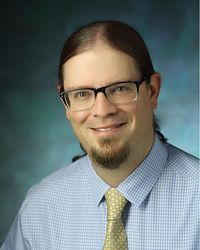
Rich Leigh, MD
Vascular NeurologyNeurology
Highlights
Age Groups Seen
- Young Adult 18-25
- Adult 26-64
Languages
- English
In-Network Plans
View All Accepted Plans (12)Gender
MaleJohns Hopkins Affiliations:
- Johns Hopkins School of Medicine Faculty
About
Primary Academic Title
Associate Professor of Neurology
Johns Hopkins Physician

Background
Richard Leigh MD is an Associate Professor of Neurology at the Johns Hopkins University School of Medicine. His research is focused on developing MRI-based tools to better understand, manage, and treat diseases that occur at the interface of the brain and the systemic circulation. This includes acute stroke triage, malignant edema assessment, primary and secondary intracranial hemorrhage, post-stroke inflammation, chronic cerebral small vessel disease, and vascular dementia. He has a particular interest in the blood-brain barrier and its role in the pathogenesis and progression of cerebrovascular disease.
Dr. Leigh originally trained as a biomedical and electrical engineer at Johns Hopkins University prior to completing a medical degree from Case Western Reserve University. He completed a medical internship and neurology residency at New York Presbyterian Hospital Weil Cornell Medical Center where he was selected to serve as Chief Resident of Neurology from 2007 to 2008. After residency, he returned to Hopkins as a research fellow in the lab of Dr. Argye Hillis where he was mentored in MRI biomarker development by Dr. Peter Barker. He completed a fellowship in vascular neurology and joined the faculty of the Cerebrovascular Division at Johns Hopkins in 2010.
From 2014–2019 Dr. Leigh was an investigator in the intramural program at the National Institutes of Health where he formed the Neuro Vascular Brain Imaging (NVBI) Unit in the Stroke Branch of NINDS. After completion of his appointment at the NIH, he brought the NVBI to Hopkins and became an extramural NIH investigator. Dr. Leigh is part of the Brain Attack Team at Hopkins which manages treatment of patients with acute stroke presenting to area hospitals. He attends on the inpatient stroke wards of Johns Hopkins Hospital and sees patients with cerebrovascular disease in outpatient clinic at Green Spring Station in Lutherville, MD.
Centers and Institutes
Find a Clinical Trial
View all trials by this principal investigator.
Recent News Articles and Media Coverage
Research Interests
Stroke, Dementia, MRI, Blood-brain barrier, Perfusion imaging, Brain health
Lab Website
Dr. Leigh is chief of the Neuro Vascular Brain Imaging Laboratory which aims to advance the understanding, treatment, and prevention of neurologic disease by developing, implementing and validating novel imaging techniques. Although the techniques developed are often applicable to a host of neurologic conditions, there is a particular focus on using magnetic resonance imaging (MRI) in vascular brain disease. Although our techniques are primarily aimed at the management of stroke, they are likely to have a broad impact, improving imaging of patients with brain tumors, Alzheimer’s disease, multiple sclerosis and traumatic brain injury.
Research Summary
Richard Leigh MD is biomedical engineer and stroke neurologist who uses MRI to study neurologic disease. He is an internationally recognized expert on imaging the blood-brain barrier (BBB). He developed a post-processing imaging method, Blood Brain Permeability Imaging (BBPI), which uses dynamic susceptibility contrast images to generate BBB heatmaps that reflect BBB integrity. His work in cerebrovascular disease has shown that BBPI can be used to predict bleeding complications and estimate dementia risk. Ongoing research is focused on developing BBPI as a general marker of brain health to guide treatment strategies. Additionally he has worked on imaging biomarkers for estimating perfusion deficits without perfusion imaging, detecting gadolinium leakage into ocular structures (GLOS), and using amide proton transfer imaging to measure pH in the brain.
Google Scholar - Publications
PubMed - Publications
Selected Publications
- Leigh R, Valyraki N, Wang NY, Abomulay M, Ter Schiphorst A, Valls Carbó A, Hernández-Pérez M, Charbonneau F, Arquizan C, Wacongne A, Sablot D, Costalat V, Ozsancak C, Cohen C, Pasi M, Boulouis G, Yuen N, Desilles JP, Albers GW, Olivot JM, Seners P. Core Blood-Brain Barrier Disruption in Patients With Large Vessel Occlusion. Stroke. 2026 Jun;57(6):1727-1736. PubMed PMID: 42089148; PubMed Central PMCID: PMC13151992.
- Leigh R, Kern KC, Wang NY, Gottesman RF, Wright CB. Disruption of the Blood-Brain Barrier Predicts Progression of Cerebral Small Vessel Disease White Matter Hyperintensities. Ann Neurol. 2026 Feb;99(2):437-448. PubMed PMID: 41117445; PubMed Central PMCID: PMC12894497.
- Leigh R, Christensen S, Campbell BC, Marks MP, Albers GW, Lansberg MG, DEFUSE 2 Investigators. Pretreatment blood-brain barrier disruption and post-endovascular intracranial hemorrhage. Neurology. 2016 Jul 19;87(3):263-9. PubMed PMID: 27316247; PubMed Central PMCID: PMC4955280.
- Leigh R, Oishi K, Hsu J, Lindquist M, Gottesman RF, Jarso S, Crainiceanu C, Mori S, Hillis AE. Acute lesions that impair affective empathy. Brain. 2013 Aug;136(Pt 8):2539-49. PubMed PMID: 23824490; PubMed Central PMCID: PMC3722353.
- Leigh R, Jen SS, Varma DD, Hillis AE, Barker PB. Arrival time correction for dynamic susceptibility contrast MR permeability imaging in stroke patients. PLoS One. 2012;7(12):e52656. PubMed PMID: 23285132; PubMed Central PMCID: PMC3527589.
Patents
US Patent US10076263B2: System and method for blood brain permeability imaging (bbpi) using dynamic susceptibility contrast magnetic resonance imaging.
Honors
2001 American Academy of Neurology Summer Student Scholarship
2003-2004 Department of Neurology Award for outstanding performance by a medical student at Univ. Hospitals/VA,
2007-2008 Distinguished Housestaff Award, New York Presbyterian Hospital Weill-Cornell Medical Center
2007-2008 Chief Resident of Neurology, New York Presbyterian Hospital Weill-Cornell Medical Center
2011 Johns Hopkins Neurology Clerkship Teaching Award
2016 Stroke Progress and Innovation Award from the American Heart Association.
2017 NIH Special Act Award for service to Emergency Stroke Program and high impact publications
2018 NINDS Director’s Mentor Award for exemplary performance while demonstrating significant leadership, skill, and ability to serve as a mentor
2020 Stroke Outstanding Reviewer Award from the American Stroke Association of the AHA.
2023 Recipient of the American Heart Association Innovative Project Award
2025 Visiting Professor at Universite Toulouse III - Paul Sabatier, Toulouse, France
2025 Stroke Outstanding Reviewer Award from the American Stroke Association of the AHA.
Memberships
Member of the American Heart Association
Member of the American Neurological Association
Professional Activities
2019-present: Editorial Board, Stroke: A Journal of Cerebral Circulation (American Heart Association)
Locations
- Johns Hopkins Health Care & Surgery Center - Green Spring Station, Lutherville
- 10753 Falls Road, Pavilion II STE 115, Lutherville, MD 21093
- Get Directions
- Phone: 410-955-9441
- Fax: 410-616-7231
Expertise
Education
- Fellowship: Johns Hopkins University School of Medicine, Vascular Neurology, 2010
- Residency: New York-Presbyterian/Weill Cornell, Neurology, 2008
- Medical Education: Case Western Reserve School of Medicine, MD, 2004
Board Certifications
- Vascular Neurology: American Board of Psychiatry and Neurology, 2011
- Neurology: American Board of Psychiatry and Neurology, 2008
Insurance
- Aetna
- CareFirst
- Cigna
- First Health
- Geisinger Health Plan
- HealthSmart/Accel
- Johns Hopkins Health Plans
- MultiPlan
- Pennsylvania's Preferred Health Networks (PPHN)
- Point Comfort Underwriters
- Private Healthcare Systems (PHCS)
- Veteran Affairs Community Care Network (Optum-VACCN)