
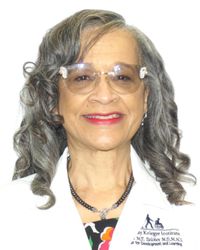
Harolyn Belcher, MD
Neurodevelopmental DisordersPediatric Neurology
Highlights
Age Groups Seen
- Infant 0-2
- Child 3-12
- Adolescent 13-17
Languages
- English
Gender
FemaleJohns Hopkins Affiliations:
- Johns Hopkins School of Medicine Faculty
About
Professional Titles
- Director of the Center for Diversity in Public Health Leadership Training at Kennedy Krieger Institute
Primary Academic Title
Professor of Pediatrics
Background
Dr. Belcher is a Professor of Pediatrics at Johns Hopkins University School of Medicine who is jointly appointed in the Johns Hopkins Bloomberg School of Public Health, Department of Mental Health. She is vice president and Director of the Center for Excellence in Public Health Leadership at Kennedy Krieger Institute. She is Principal Investigator of two Centers for Disease Control and Prevention public health leadership training programs to promote workforce development in public health research, training, and leadership experiences for undergraduate, graduate, medical, dental, pharmacy, and veterinary students. Dr. Belcher was the co-director of the National Center for Health Policy Research Scholars funded by the Robert Wood Johnson Foundation. In 2016, Dr. Belcher received 5-year funding from HRSA to promote diversity in the maternal and child field.
Dr. Belcher was Principal Investigator (PI) of two National Child Traumatic Stress Network (NCTSN) grant funded by the Substance Abuse and Mental Health Services Administration (SAMHSA) and completed a K-award from National Institute of Mental Health to evaluate a curriculum that promotes parental emotional well-being and knowledge of child development for young parents of children enrolled in Early Head Start. She is co-PI on a National Institutes of Health (NIH) grant to conduct a cost comparison of two evidence-based parent interventions for young children with emotional and behavioral problems. Dr. Belcher was co-investigator on a community-based Head Start family and child behavioral health prevention intervention grant funded by SAMHSA. In addition, Dr. Belcher was the PI on a SAMHSA grant providing comprehensive substance abuse treatment, health care, social work, parent education, and evaluations for women who were pregnant and drug-dependent and, following birth, their children.
Dr. Belcher collaborated on community-based initiatives to support recruitment and parent education of African American parents participating in church-based foster care for children with drug exposure and HIV infection in Tampa, Florida. While in Florida, Dr. Belcher was the director of the Developmental Evaluation and Intervention (DEI) program at University of South Florida. The DEI program provided center and home-based evaluation and treatment services for infants and young children who were treated in Neonatal Intensive Care Units and whose families' incomes were at 250% of poverty or lower. This program expanded to serve children and families in five counties.
Contact for Research Inquiries
716 North Broadway
Baltimore, MD 21205
Phone: (443) 923-3593
hbelche1@jhmi.edu
Research Interests
Neurodevelopment pediatrics and substance abuse treatment, prevention and outcomes.
Research Summary
Dr. Belcher has worked in the area of substance abuse prevention, treatment and outcome. While on faculty at the University of South Florida, Dr. Belcher was instrumental in developing (1) community-based programs integrating prenatal care, substance abuse treatment, parent education and pediatric follow-up for pregnant drug-dependent women, and (2) specialized foster care evaluation and education programs for church-based foster care for HIV positive and drug exposed infants (Wallace and Belcher, 1997). Dr. Belcher is a co-investigator in an on-going NIH study to evaluate the impact of home-based nursing intervention for children with intrauterine drug exposure. Findings from this study suggest that children with intrauterine drug exposure have neuromotor abnormalities in the first year that improve over time (Belcher, et al., 1999). Children with intrauterine drug exposure (IUDE) who receive home-based intervention have fewer behavioral problems and less parental distress than those who did not receive the home intervention (Butz, et al., 2001).
Dr. Belcher served as a co-investigator on a community-based head start prevention intervention grant funded by the Substance Abuse and Mental Health Services Administration. This grant, the Behavioral Enhancement through Training and Teaching to Expand Resiliency (BETTER) Program, endeavored to study the impact of on-site mental health clinicians, parent education, and substance abuse prevention programs at two Baltimore City head start sites (Belcher, et al., 2001). In addition, Dr. Belcher evaluates children with intrauterine drug exposure in her clinical practice at the Kennedy Krieger Institute.
Dr. Belcher is the principal investigator for an early head start prevention program, entitled the "Helping-U-Grow study" (HUGS). The HUGS study, funded by the National Institute of Mental Health, uses a randomized design to evaluate the effectiveness of the parents' healing curriculum for parents of early head start pupils. Dr. Belcher is also principal investigator on a federal grant to evaluate methods to optimize compliance during MRIs and measure the effects of illicit drug exposure on brain development and another grant that created a National Child Traumatic Stress Center at the Kennedy Krieger Institute Family Center to study and improve outcome for children exposed to maltreatment.
PubMed - Publications
Honors
- Morgan State University ASCEND Program Exemplary Mentor Award, 1/1/16
- Johns Hopkins Universities Diversity Recognition Award, 1/1/14
- Alpha Omega Alpha, 1/1/11
- African American Mental Health Research Scientist Scholar, 1/1/05
- Governor's Citation for Service on the Methylphenidate Task Force, 1/1/99
- Meritorious Civilian Service Award, Department of Navy, 1/1/95
- Friend of the Young Child Award, Hillsborough County, Tampa, FL, 1/1/93
- Community Service Award, Project STRIVE, Tampa, FL, 1/1/92
- First place for poster presentation, American Academy of Cerebral Palsy and Developmental Medicine, 10/1/87
- Second place for outstanding student research, Howard University College of Medicine, 1/1/79
Locations
- Kennedy Krieger Institute
- 707 North Broadway, Neurology Developmental Medicine, Baltimore, MD 21205
- Get Directions
- Phone: 443-923-5933
- Fax: 443-923-5875
Expertise
Education
- Fellowship: Kennedy Krieger Institute, Development Pediatrics, 1987
- Residency: Children's National Hospital, Pediatrics, 1985
- Medical Education: Howard University College of Medicine, MD, 1982
Board Certifications
- Neurodevelopmental Disabilities: American Board of Psychiatry and Neurology, 2001
- Neurodevelopmental Disabilities: American Board of Pediatrics, 2001