
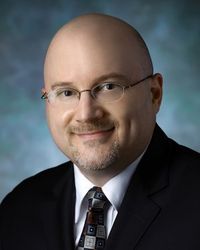
David Newman-Toker, MD, PhD
Neurotology
Highlights
Johns Hopkins Affiliations:
- Johns Hopkins School of Medicine Faculty
About
Professional Titles
- Director, Division of Neuro-Visual & Vestibular Disorders, Department of Neurology
- David Robinson Professor in Vestibular Neurology
- Core Faculty, Division of Brain Injury Outcomes, Department of Neurology
- Core Faculty, Graduate Training Program in Clinical Investigation
- Director, Armstrong Institute Center for Diagnostic Excellence
Primary Academic Title
Professor of Neurology
Johns Hopkins Physician

Background
David Newman-Toker, M.D., Ph.D., is an internationally recognized leader in neuro-otology, acute stroke diagnosis, and diagnostic errors research. He completed his undergraduate studies at Yale University, his medical degree at University of Pennsylvania, his residency training and neuro-ophthalmology fellowship at Harvard University, his neuro-otology fellowship at Johns Hopkins University School of Medicine, and his doctoral degree in clinical research methods at the Johns Hopkins Bloomberg School of Public Health.
He has served as a full-time faculty member at the Johns Hopkins University School of Medicine since 2002. He is the David Robinson Professor of Vestibular Neurology and also holds appointments in Otolaryngology, Ophthalmology, Emergency Medicine, Acute Care Nursing, Health Sciences Informatics, Epidemiology, and Health Policy & Management at Johns Hopkins.
Dr. Newman-Toker is a bedside-to-populations translational researcher, with a focus on eliminating diagnostic errors and achieving diagnostic excellence. He is a leader in the national and international movements to eliminate patient harms from diagnostic error. Dr. Newman-Toker’s clinical focus is on diagnosis of acute disorders affecting the brainstem and cranial nerves, particularly stroke. He is recognized for his research in novel eye-movement-based bedside methods for diagnosing stroke in patients with acute dizziness and vertigo in the emergency department and, in 2024, won the international Bárány Society’s Hallpike-Nylén Prize for clinical research achievement.
Dr. Newman-Toker serves as director of the Division of Neuro-Visual & Vestibular Disorders in the Department of Neurology. He also directs the Armstrong Institute Center for Diagnostic Excellence, whose mission is to catalyze efforts to improve diagnostic performance, develop the science of diagnostic safety, and enhance diagnostic research. He has been the principal investigator on numerous National Institutes of Health, Agency for Healthcare Research and Quality (AHRQ), and foundation grants. He has published over 165 journal articles and given more than 300 invited lectures. He has served as an expert consultant on diagnostic safety and quality to AHRQ, the National Quality Forum, and the National Academy of Medicine. He has testified before Congress on the use of artificial intelligence for medical diagnosis. He was president of the Society to Improve Diagnosis in Medicine from 2018-2020.
Centers and Institutes
CV
Clinical Trial Keywords
vertigo; dizziness; stroke; diagnosis; diagnostic devices; diagnostic strategy
Recent News Articles and Media Coverage
Understanding Diagnostic Errors: AJR Podcast Series on Diagnostic Excellence and Error, Episode 2, AJR (07/31/2024)
Influencer Chan Plante on Coping with Misdiagnosis and Finding a Community, Brain & Life Podcast (07/14/2024)
Uncovering the Shocking Dangers of Misdiagnosis, The People's Pharmacy (Show 1355) (09/23/2023)
Interview: New study of serious harms from diagnostic error in America with David Newman-Toker, CBS News Philadelphia, July 20, 2023
Research-Focused Professorship Drives Innovations in Stroke Diagnosis, JHU Giving (03/15/2022)
3 Tips To Avoid Medical Mistakes, Business First AM, August 6, 2019
Medical Misdiagnoses: More Common Than You Think (podcast) WYPR (10/31/17)
The Team Sport of Diagnosis: A Culture Shift Can Reduce Missed Diagnoses, The Health Care Blog (06/15/16)
Strokes, long on the decline among the elderly, are rising among younger adults, Washington Post (06/16/2014)
Stroke Often Missed in ERs, Study Finds, US News & World Report (04/07/14)
Emergency Docs More Likely To Miss Signs Of Stroke In The Young, NPR (04/05/14)
Stroke goggles: Can new tech diagnose a stroke?, CBS News March 6, 2013
Additional Academic Titles
Joint Appointment in Ophthalmology, Professor of Emergency Medicine, Professor of Otolaryngology-Head and Neck Surgery
Contact for Research Inquiries
Johns Hopkins Hospital
CRB-II, Room 2M-03 North
Baltimore, MD 21231
Phone: (443) 287-9593
Research Interests
diagnostic decision support., dizziness and vertigo, eye movement analysis, informatics tools and devices at the point of care, recognition and prevention of diagnostic errors in frontline healthcare settings, stroke misdiagnosis in the emergency department
Google Scholar - Publications
PubMed - Publications
Graduate Program Affiliations
- Informatics, Division of Health Sciences Informatics
- Epidemiology, Bloomberg School of Public Health
- Health Policy & Management, Bloomberg School of Public Health
Professional Activities
Principal Faculty, Armstrong Institute for Patient Safety & Quality
Locations
- The Johns Hopkins Hospital
- 1800 Orleans Street, Baltimore, MD 21287
- Get Directions
- Phone: 410-955-5000
- Fax: 410-955-5001
- Johns Hopkins Bayview Medical Center
- 4940 Eastern Avenue, Baltimore, MD 21224
- Get Directions
- Phone: 410-550-0100
- Fax: 410-550-0101
Expertise
Education
- Graduate School: Johns Hopkins Bloomberg School of Public Health, PhD, 2007
- Fellowship: Johns Hopkins University School of Medicine, Neuro-Otology, 2002
- Fellowship: Massachusetts General Hospital, Neuro-Ophthalmology, 2000
- Residency: Massachusetts General Hospital, Neurology, 1999
- Medical Education: University of Pennsylvania School of Medicine, MD, 1995
Board Certifications
- Neurology: American Board of Psychiatry and Neurology, 2024
Insurance
- Aetna
- CareFirst
- Cigna
- First Health
- Geisinger Health Plan
- HealthSmart/Accel
- Johns Hopkins Health Plans
- MultiPlan
- Pennsylvania's Preferred Health Networks (PPHN)
- Point Comfort Underwriters
- Private Healthcare Systems (PHCS)
- Veteran Affairs Community Care Network (Optum-VACCN)